Layers
07.02 - 07.03 2025
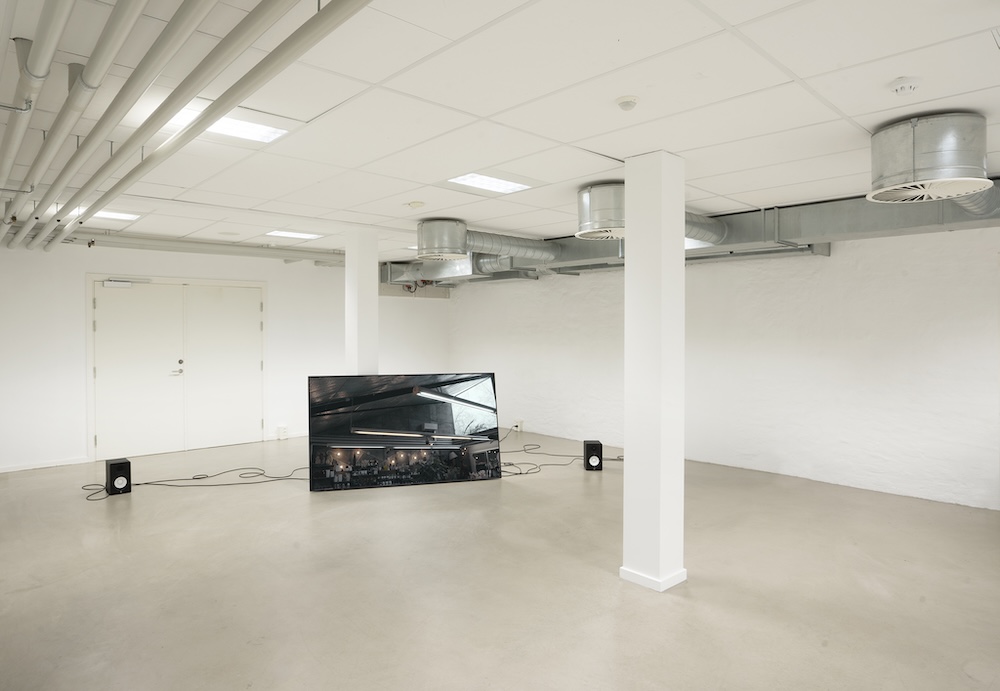
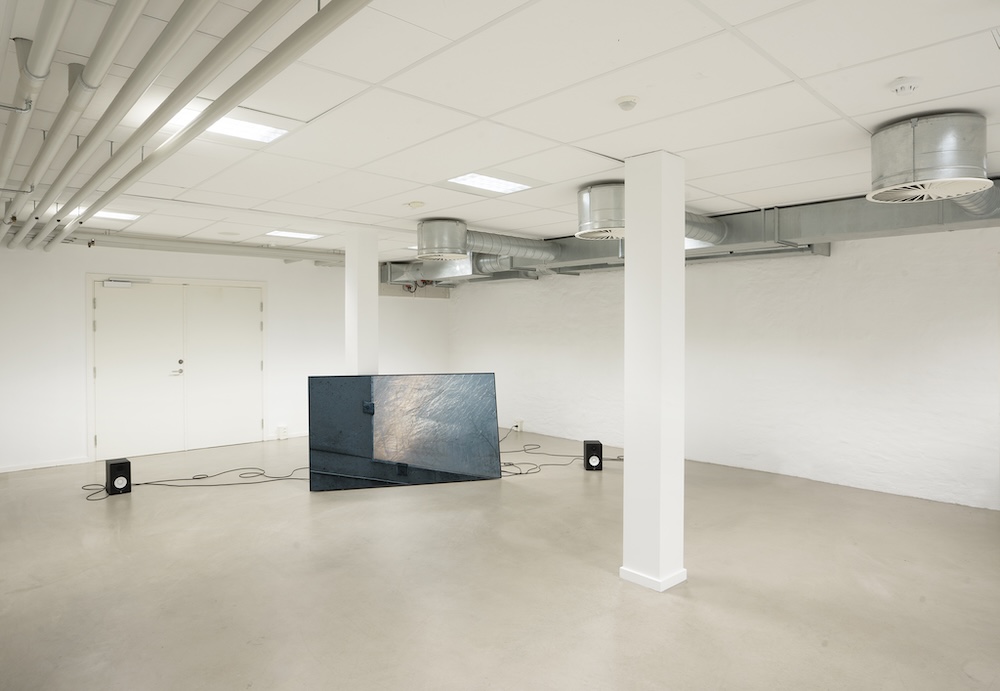
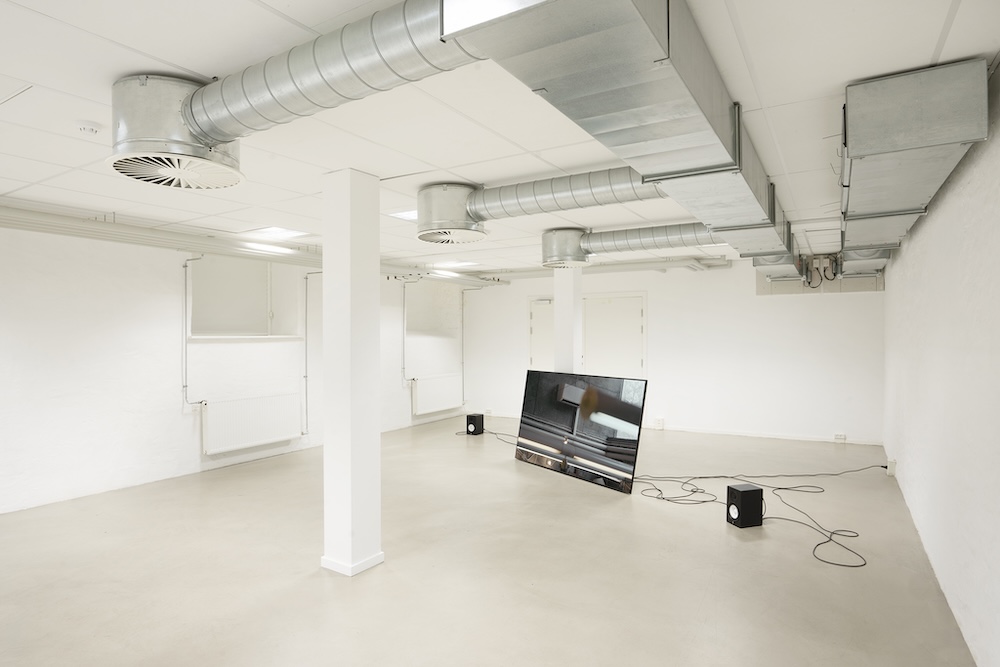
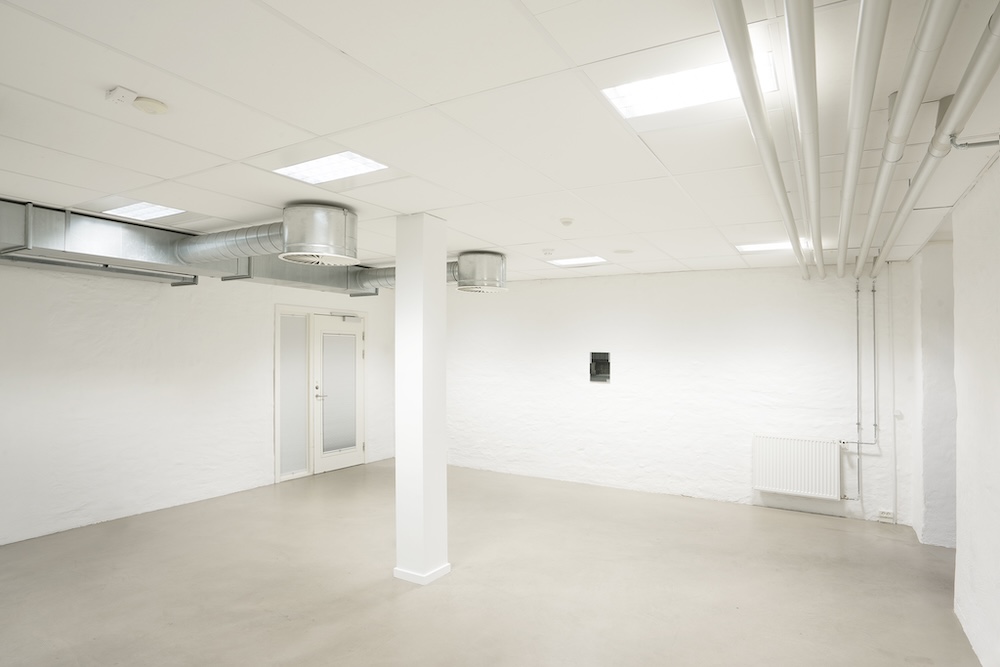
The exhibition Layers is a solo exhibition by Jonas Handskemager.
“Writing about music is like dancing about architecture.”(1)
The career of Swedish architect Sigurd Lewerentz (1885-1975) had three phases. The first and last of these periods of activity, which produced his most celebrated buildings, seem in some sense at odds with the middle part of his career. Put simply, the middle phase (1930-1955), marked as it was by the founding of Idesta, a company manufacturing high quality retail and display systems (shop windows, doors and vitrines), seems preoccupied with the most superficial aspects of modern urban life, with commerce and display, while the beginning and end of his career are best known for his work on a number of extraordinary projects that engage with the most fundamental of existential questions — with life and death and the journey of the eternal soul. These early and late masterpieces include the Woodlands Cemetery (1920) and St. Mark’s Church (1956), both in the Stockholm suburbs, and St. Peter’s Church (1963-1966) at Klippan, Skåne.
As a building for the propagation, display and sale of flowers to visitors to Malmö’s Eastern Cemetery, the Flower Kiosk (1969)(2), designed when Lewerentz was 84 years old, appears to connect his involvement with retail architecture and his work on those more profound, more existential projects. With its elegantly elongated, south-facing, shop-front glazing showcasing the Kiosk’s wares, and its two, north-facing, elevated ‘eyes-to-the-sky’ windows, bringing much needed light to the plants housed inside, this ostensibly brutalist, twin-faced building can be understood as a bridge between the different phases of his career, between the superficial and the fundamental, the commercial and the spiritual. The Flower Kiosk is a retail space which, through its carefully executed simplicity, its insistent materiality, its soaring Verdigris roof and its Janus nature, is capable of evoking powerful emotions, channelling thoughts of life, death and renewal.
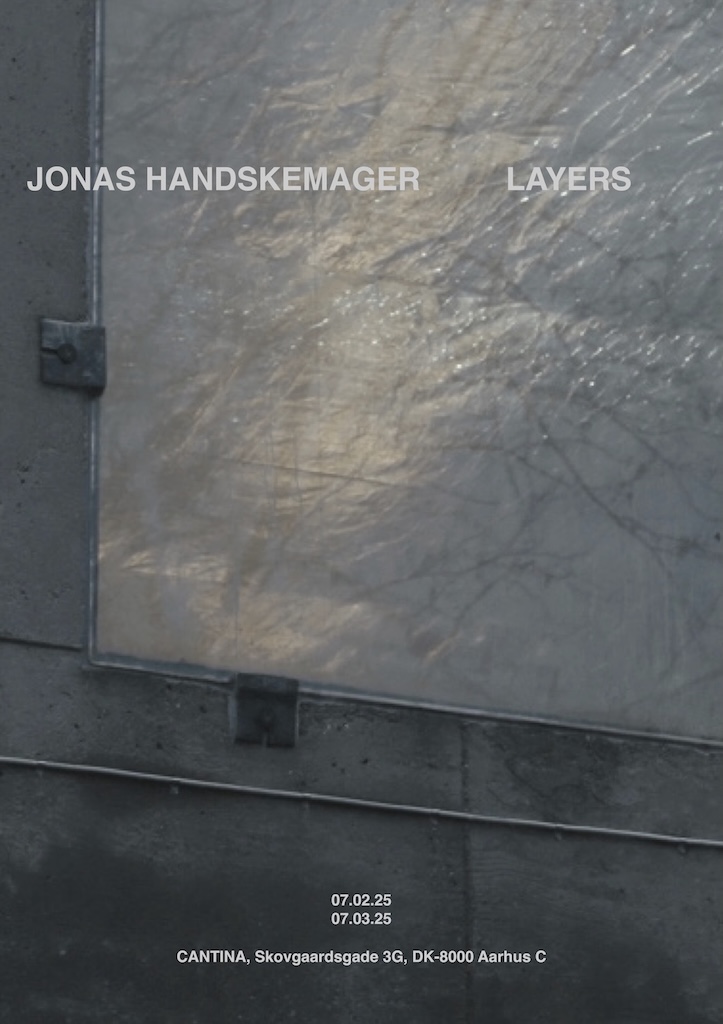
In Jonas Handskemager’s short film Layers (2025), we enter the Flower Kiosk, like the northern light, through one of the two high square windows — an elegant, flush-fitting, interface between inside and outside — a surface on which the characteristic silver foil ceiling cladding(3) (inside) and reflections of the surrounding winter branches (outside) coalesce, skin-like. The camera’s restless eye, pulls us inside, floating amongst the light fittings. Nothing functional is hidden. We track Lewerentz’s ivy-like electrical wiring that creeps rhythmically along the raw concrete walls — junction box downbeats, light-bulb backbeats. A xylophone accompanies our swirling trajectory, speculative, fairground-like. We are immersed in vegetation, both for the living and the dead, potted plants and cut flowers, deeply veined philodendron leaves, vibrant winterberries, peonies, dahlias, carnations and white lilies. A figure lurks, ill defined. The sound of a machine draws us in.
In this dualistic scenography of concrete and flowers, the anonymous protagonist, a densely tattooed, heavily muscled man, seems incongruous at first, anachronistic even. A fish out of water. But his skin, taut over well-schooled muscle mass and prominent veins, is covered in filigree inked ornamentation, flora and fauna, a skull, a lotus flower, a butterfly, tangled vegetation, all muted in the Flower Kiosk’s soft winter light, but resonant here, nonetheless. He seems to be engaged in a quasi-ritualistic, bodybuilder’s warm-down — his carefully choreographed movements are a self-taught duet for man and machine.(4) He presses the gently vibrating cushioned pad of what appears to be a generic car polishing machine against his chest and arms, massaging inflamed muscles, soothing the microtraumas so vital to his body’s transformation.(5) The polishing machine, like the camera that tracks it, was built with surface concerns in mind, the external shell, the play of light, but here it has been repurposed for internal affects — to go deep. In Layers, it seems, we occupy a liminal space in which binary ideas of inside and outside, the building and the body, ornament and fundament, are constantly upended and destabilised.
Finally, the restive camera swirls away again, more plants, that rhythmic wiring, another filigree forearm and then a bow of sorts — his mechanical dance partner laid to rest. We leave, as we arrived, through glass, markedly more skin-like than before, and then out into the winter gloom of the late afternoon.
(1) This quote has been variously misattributed to musicians Laurie Anderson and Elvis Costello. Costello himself has attributed the quote to the comedian Martin Mull but a variation “talking about music is like singing about economics” has appeared in print since as early as 1918.
(2) Jonas Handskemager’s first work connected to Sigurd Lewerentz’s building Untitled (Flower Kiosk) 2022, a somewhat austere black and white photograph of the Kiosk’s north façade, seems in retrospect to be a prelude to Layers. The image transforms the building into scenography — a cobbled stage with a concrete and glass theatrical flat behind.
(3) It is perhaps interesting to note that Lewerentz’s final architectural practice was operated out of a studio in his back garden known as the Black Box. Designed for him by fellow architect Klas Anselm while Lewerentz was working on the Flower Kiosk project, this tarpaper-clad structure with its three modest skylights is noted for its Warholesque reflective silver foil wallcovering, the same material that bounces the sometimes-scarce Malmö sunlight around the Flower Kiosk. Andy Warhol’s quintessentially pop decoration for his New York studio, installed in 1964, was inspired by the apartment of photographer, filmmaker and lighting designer Billy Name. The look and feel of Lewerentz’s studio link it to another black box, the world’s first film studio, Thomas Edison’s similarly tarpapered Black Maria (1893), in which Edison made a number of early film experiments, the first of which was a short film of three actors playing blacksmiths working at an anvil. Unlike the skylights in Lewerentz’s studio, the Black Maria had a whole section of roof (reminiscent of the sloping roof of the Flower Kiosk) that opened up to allow light into the studio for filming.
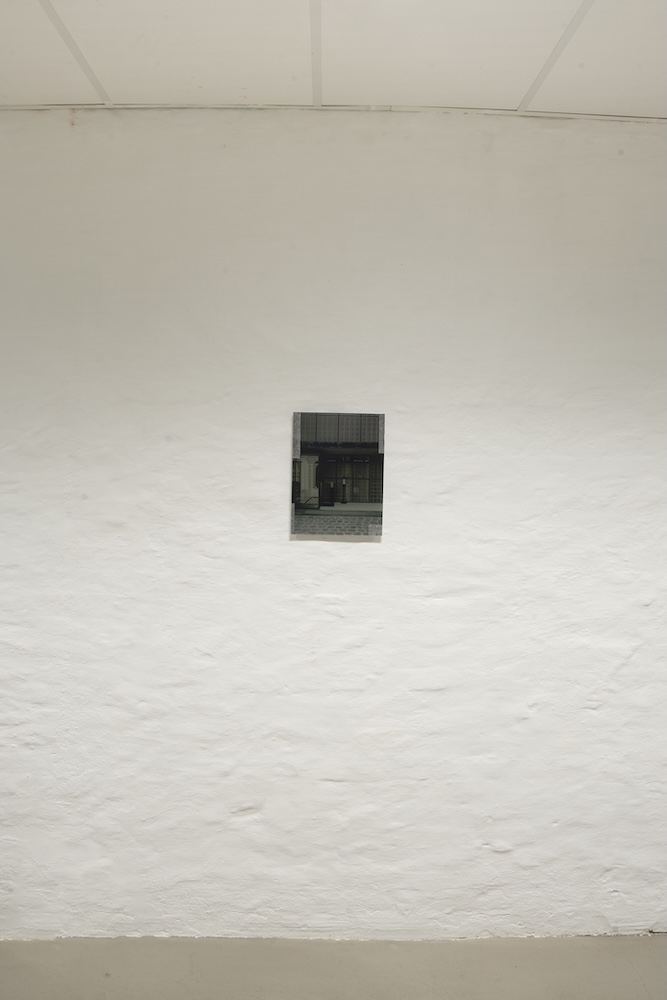
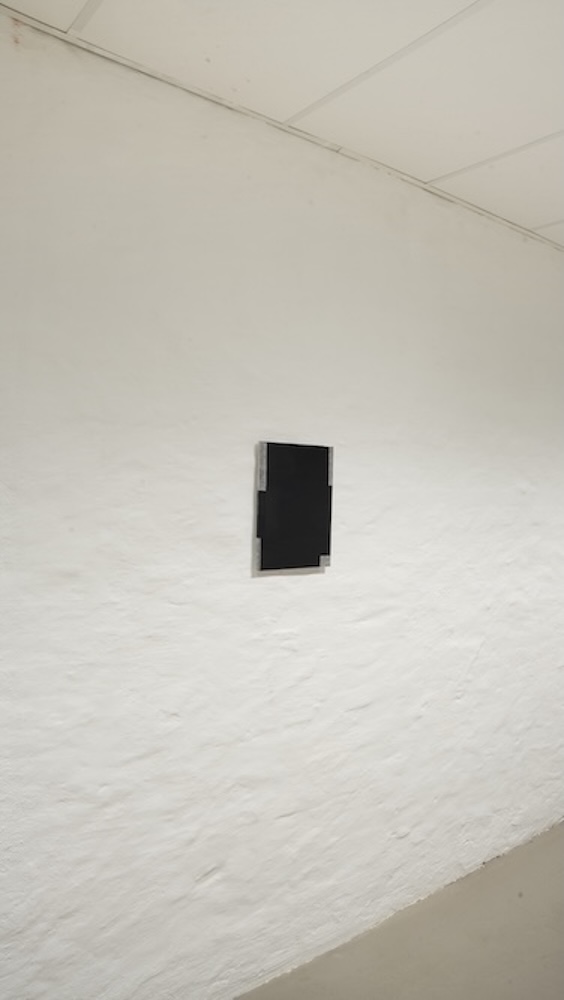
(4) Accompanying Layers is a photographic work Well it doesn’t see you (Maison de Verre) (2022) glazed beneath a so called ‘privacy screen’ developed for mobile phones and computers. Viewing the image demands a certain dance of our own — a side-stepping jig from the visible to the invisible and back again. The image, that comes and goes depending on your point of view, sometimes engulfed in blackness, sometimes crystal clear, is of an enduringly radical Parisian house, the Glass House (1928-1932) designed by architects Pierre Chareau, Bernard Bijvoet and blacksmith Louis Dalbet and best known for its façade of translucent glass bricks. “During the day, the sunlight filters through the glass blocks, casting an ethereal glow across the house. At night, the house becomes a luminous beacon, with light radiating from its glass façade (...) a clever interplay between the visible and the hidden, the public and the private.” (Archeyes.com)
(5) “You’re part of a choreography that the architecture is a background for. The body itself goes in as one thing and leaves as another” (Sven Blume, Lewerentz, Divine Darkness, 2024)
Exhibition text — Simon Starling
The exhibition is kindly supported by Aarhus Municipality.
The exhibition Layers is a solo exhibition by Jonas Handskemager.
“Writing about music is like dancing about architecture.”(1)
The career of Swedish architect Sigurd Lewerentz (1885-1975) had three phases. The first and last of these periods of activity, which produced his most celebrated buildings, seem in some sense at odds with the middle part of his career. Put simply, the middle phase (1930-1955), marked as it was by the founding of Idesta, a company manufacturing high quality retail and display systems (shop windows, doors and vitrines), seems preoccupied with the most superficial aspects of modern urban life, with commerce and display, while the beginning and end of his career are best known for his work on a number of extraordinary projects that engage with the most fundamental of existential questions — with life and death and the journey of the eternal soul. These early and late masterpieces include the Woodlands Cemetery (1920) and St. Mark’s Church (1956), both in the Stockholm suburbs, and St. Peter’s Church (1963-1966) at Klippan, Skåne.
As a building for the propagation, display and sale of flowers to visitors to Malmö’s Eastern Cemetery, the Flower Kiosk (1969)(2), designed when Lewerentz was 84 years old, appears to connect his involvement with retail architecture and his work on those more profound, more existential projects. With its elegantly elongated, south-facing, shop-front glazing showcasing the Kiosk’s wares, and its two, north-facing, elevated ‘eyes-to-the-sky’ windows, bringing much needed light to the plants housed inside, this ostensibly brutalist, twin-faced building can be understood as a bridge between the different phases of his career, between the superficial and the fundamental, the commercial and the spiritual. The Flower Kiosk is a retail space which, through its carefully executed simplicity, its insistent materiality, its soaring Verdigris roof and its Janus nature, is capable of evoking powerful emotions, channelling thoughts of life, death and renewal.
In Jonas Handskemager’s short film Layers (2025), we enter the Flower Kiosk, like the northern light, through one of the two high square windows — an elegant, flush-fitting, interface between inside and outside — a surface on which the characteristic silver foil ceiling cladding(3) (inside) and reflections of the surrounding winter branches (outside) coalesce, skin-like. The camera’s restless eye, pulls us inside, floating amongst the light fittings. Nothing functional is hidden. We track Lewerentz’s ivy-like electrical wiring that creeps rhythmically along the raw concrete walls — junction box downbeats, light-bulb backbeats. A xylophone accompanies our swirling trajectory, speculative, fairground-like. We are immersed in vegetation, both for the living and the dead, potted plants and cut flowers, deeply veined philodendron leaves, vibrant winterberries, peonies, dahlias, carnations and white lilies. A figure lurks, ill defined. The sound of a machine draws us in.
In this dualistic scenography of concrete and flowers, the anonymous protagonist, a densely tattooed, heavily muscled man, seems incongruous at first, anachronistic even. A fish out of water. But his skin, taut over well-schooled muscle mass and prominent veins, is covered in filigree inked ornamentation, flora and fauna, a skull, a lotus flower, a butterfly, tangled vegetation, all muted in the Flower Kiosk’s soft winter light, but resonant here, nonetheless. He seems to be engaged in a quasi-ritualistic, bodybuilder’s warm-down — his carefully choreographed movements are a self-taught duet for man and machine.(4) He presses the gently vibrating cushioned pad of what appears to be a generic car polishing machine against his chest and arms, massaging inflamed muscles, soothing the microtraumas so vital to his body’s transformation.(5) The polishing machine, like the camera that tracks it, was built with surface concerns in mind, the external shell, the play of light, but here it has been repurposed for internal affects — to go deep. In Layers, it seems, we occupy a liminal space in which binary ideas of inside and outside, the building and the body, ornament and fundament, are constantly upended and destabilised.
Finally, the restive camera swirls away again, more plants, that rhythmic wiring, another filigree forearm and then a bow of sorts — his mechanical dance partner laid to rest. We leave, as we arrived, through glass, markedly more skin-like than before, and then out into the winter gloom of the late afternoon.
(1) This quote has been variously misattributed to musicians Laurie Anderson and Elvis Costello. Costello himself has attributed the quote to the comedian Martin Mull but a variation “talking about music is like singing about economics” has appeared in print since as early as 1918.
(2) Jonas Handskemager’s first work connected to Sigurd Lewerentz’s building Untitled (Flower Kiosk) 2022, a somewhat austere black and white photograph of the Kiosk’s north façade, seems in retrospect to be a prelude to Layers. The image transforms the building into scenography — a cobbled stage with a concrete and glass theatrical flat behind.
(3) It is perhaps interesting to note that Lewerentz’s final architectural practice was operated out of a studio in his back garden known as the Black Box. Designed for him by fellow architect Klas Anselm while Lewerentz was working on the Flower Kiosk project, this tarpaper-clad structure with its three modest skylights is noted for its Warholesque reflective silver foil wallcovering, the same material that bounces the sometimes-scarce Malmö sunlight around the Flower Kiosk. Andy Warhol’s quintessentially pop decoration for his New York studio, installed in 1964, was inspired by the apartment of photographer, filmmaker and lighting designer Billy Name. The look and feel of Lewerentz’s studio link it to another black box, the world’s first film studio, Thomas Edison’s similarly tarpapered Black Maria (1893), in which Edison made a number of early film experiments, the first of which was a short film of three actors playing blacksmiths working at an anvil. Unlike the skylights in Lewerentz’s studio, the Black Maria had a whole section of roof (reminiscent of the sloping roof of the Flower Kiosk) that opened up to allow light into the studio for filming.
(4) Accompanying Layers is a photographic work Well it doesn’t see you (Maison de Verre) (2022) glazed beneath a so called ‘privacy screen’ developed for mobile phones and computers. Viewing the image demands a certain dance of our own — a side-stepping jig from the visible to the invisible and back again. The image, that comes and goes depending on your point of view, sometimes engulfed in blackness, sometimes crystal clear, is of an enduringly radical Parisian house, the Glass House (1928-1932) designed by architects Pierre Chareau, Bernard Bijvoet and blacksmith Louis Dalbet and best known for its façade of translucent glass bricks. “During the day, the sunlight filters through the glass blocks, casting an ethereal glow across the house. At night, the house becomes a luminous beacon, with light radiating from its glass façade (...) a clever interplay between the visible and the hidden, the public and the private.” (Archeyes.com)
(5) “You’re part of a choreography that the architecture is a background for. The body itself goes in as one thing and leaves as another” (Sven Blume, Lewerentz, Divine Darkness, 2024)
Exhibition text — Simon Starling
The exhibition is kindly supported by Aarhus Municipality.