A piece of land is a bar of gold
21.11 - 21.12 2025
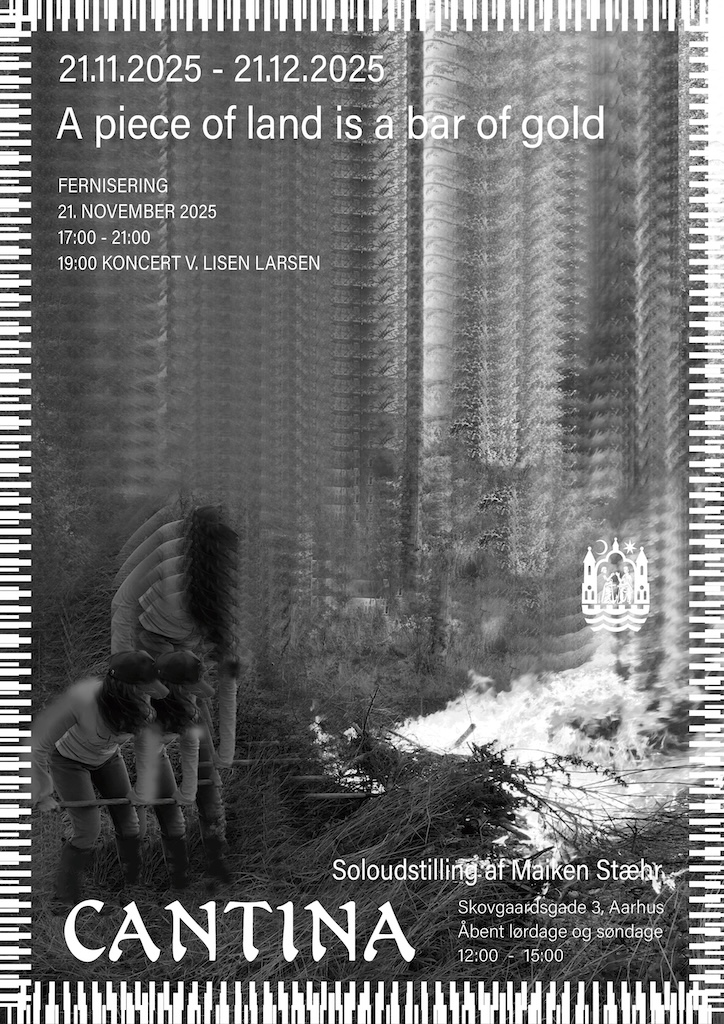
The exhibition A piece of land is a bar of gold is a solo exhibition by Maiken Stæhr.
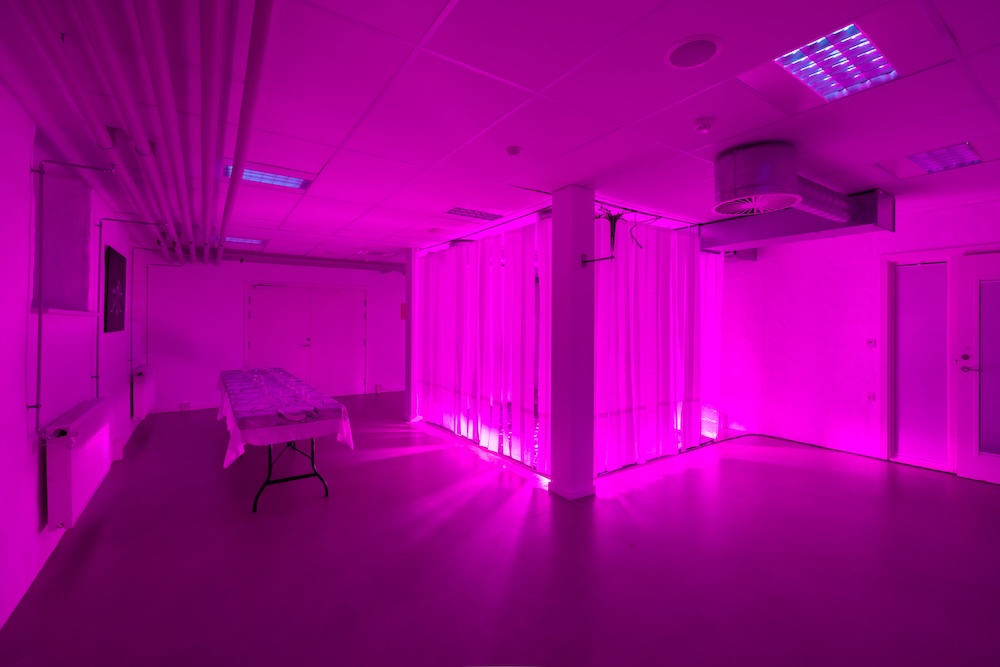
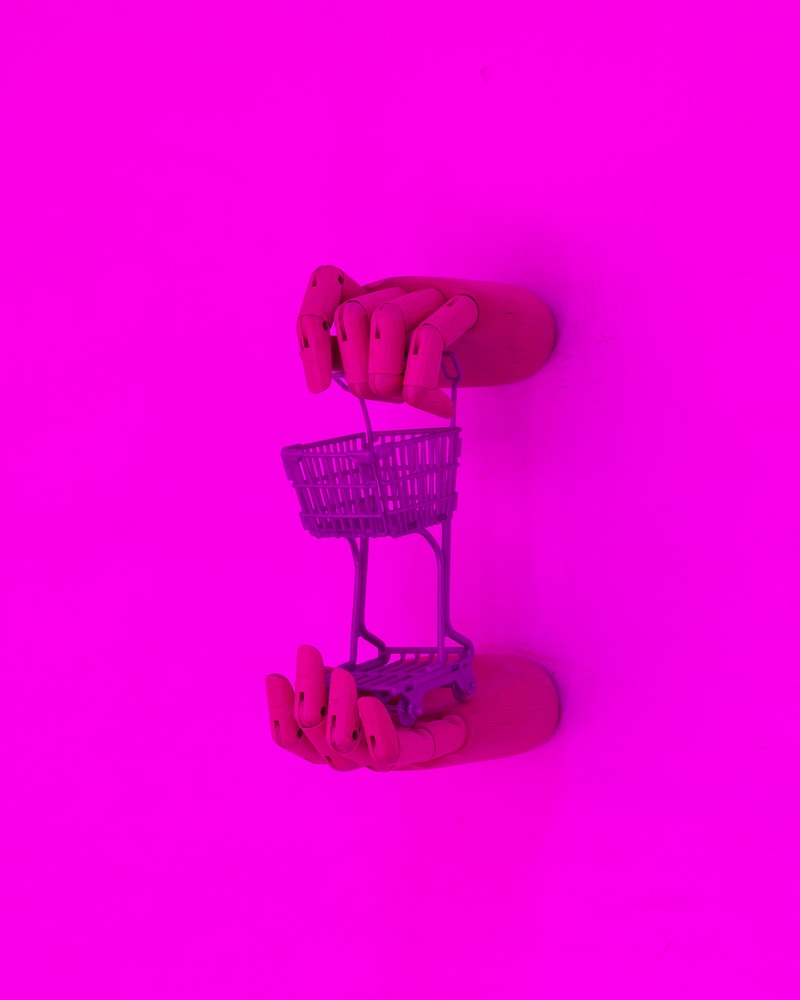
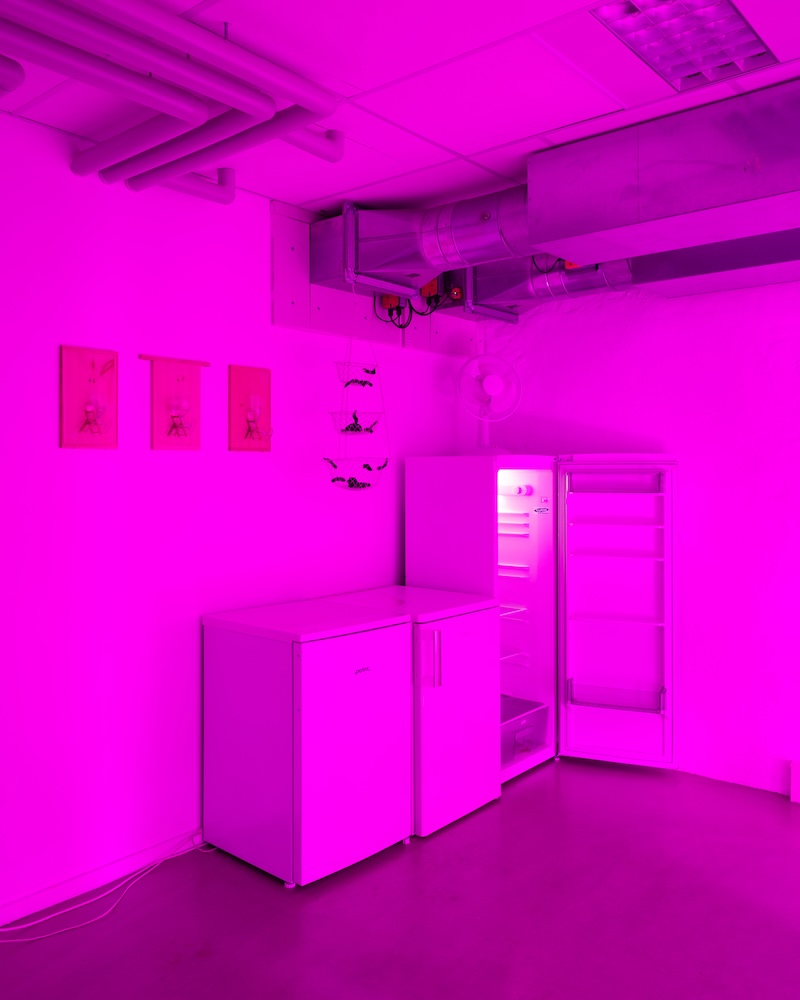
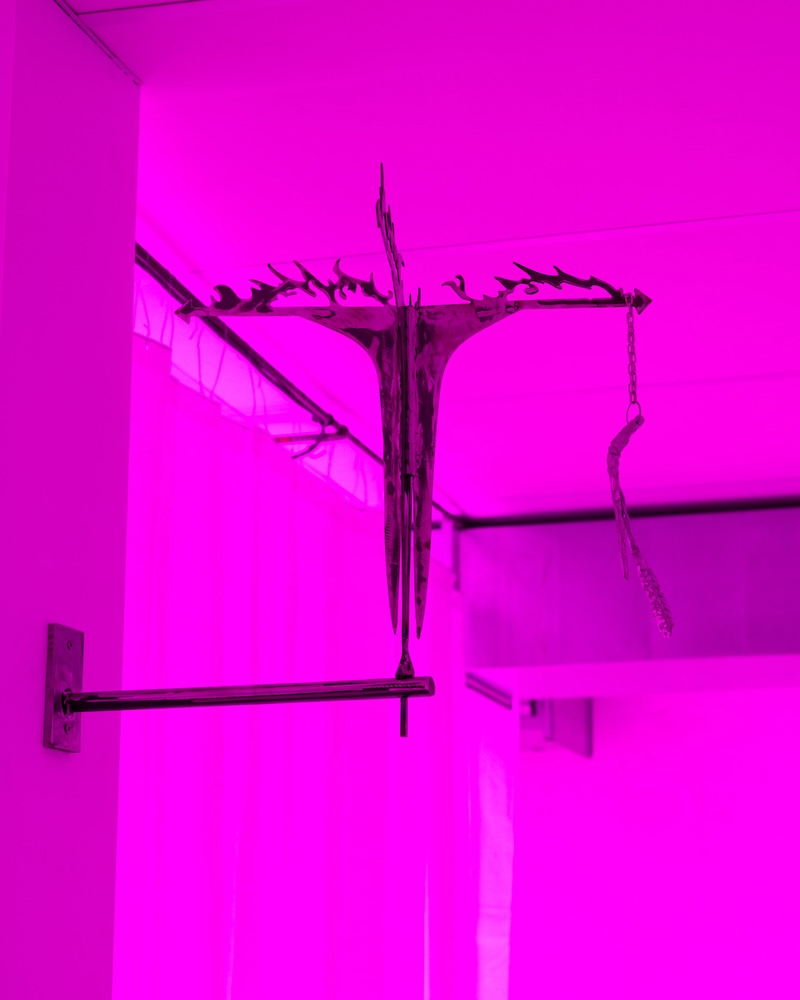
The exhibition emerges from working in a vertical farm and explores how contemporary production reshapes understandings of nature, farming, and culture. The installation take shape as a fictional production unit within a synthetic, grow-light-coloured dreamscape, examining consumption, food practices, and farming nostalgia.
The opening will feature a concert by Lisen Larsen.
New Imagined Landscapes
A piece of land is never merely a piece of land. It is an image, a promise, an economic potential, and a cultural mirror. In the exhibition A piece of land is a bar of gold, Maiken Stæhr presents an image of a new form of agricultural production, a kind of contemporary technological proposal for a new production aesthetic and landscape painting.
The Landscape in Transition and Under Debate
We are facing the largest land-use transformation in several hundred years, involving 250,000 hectares of agricultural land that will be converted to increase the area devoted to nature, forest, and a healthier aquatic environment. The exhibition's title therefore resonates strongly at a time when land use is under debate and space is increasingly scarce. While the title contains an enormous sense of potential and promise, one also senses its irony, for not every piece of land and every type of soil holds the same value.
A piece of land can't be worth its weight in gold not only in a literal monetary sense, but also figuratively, since the way we utilize our landscape constitutes a cornerstone of our national identity. This became evident during Denmark's last major land-use transformation from the eighteenth to the nineteenth century, when the landscape was reshaped from wild nature into agricultural land and timber-producing forests. This development was beautifully documented by the painters of the Danish Golden Age, who depicted cultivated fields alongside untamed nature, images that continue to shape our understanding of what constitutes the ideal Danish landscape.
Step Into the New Landscape Image
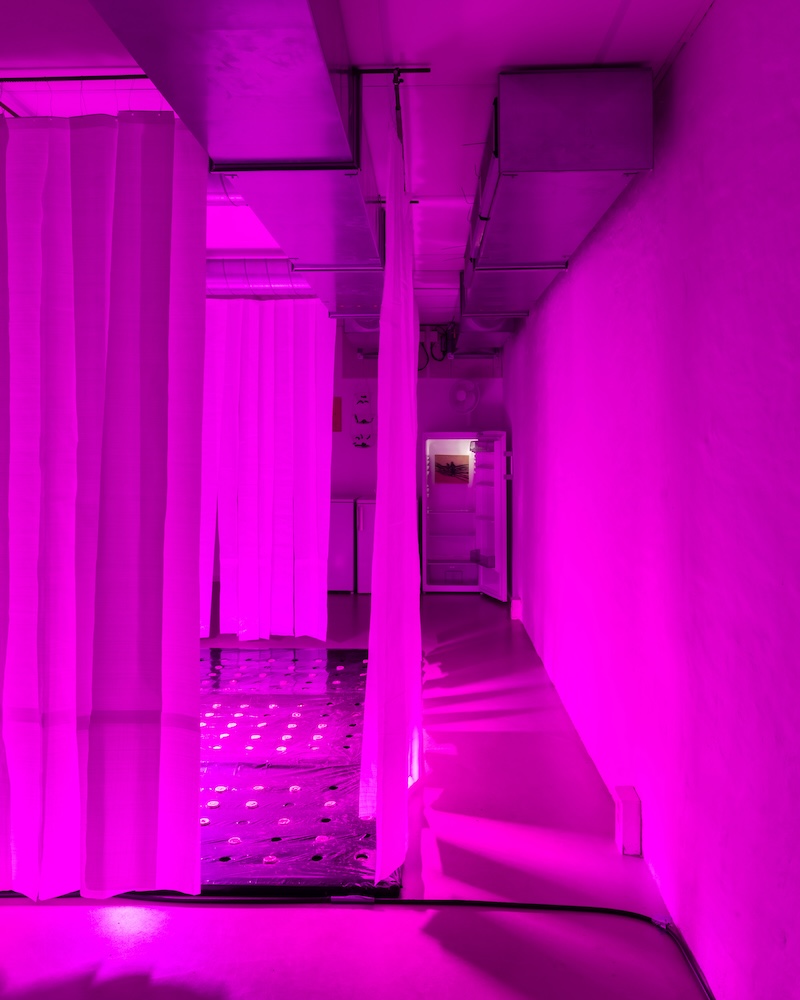
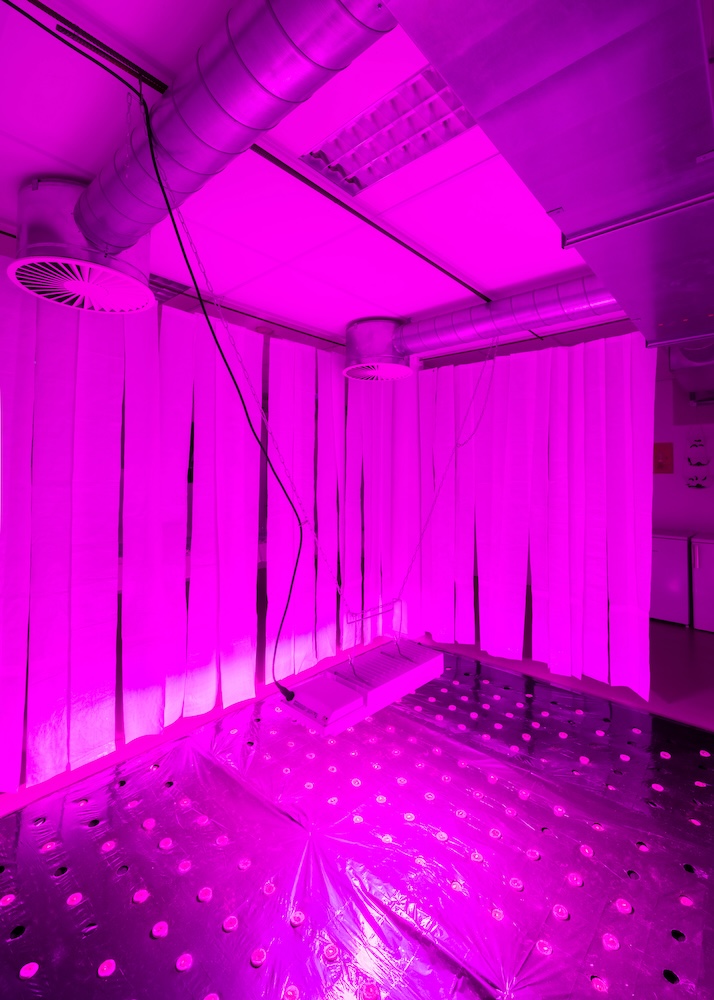
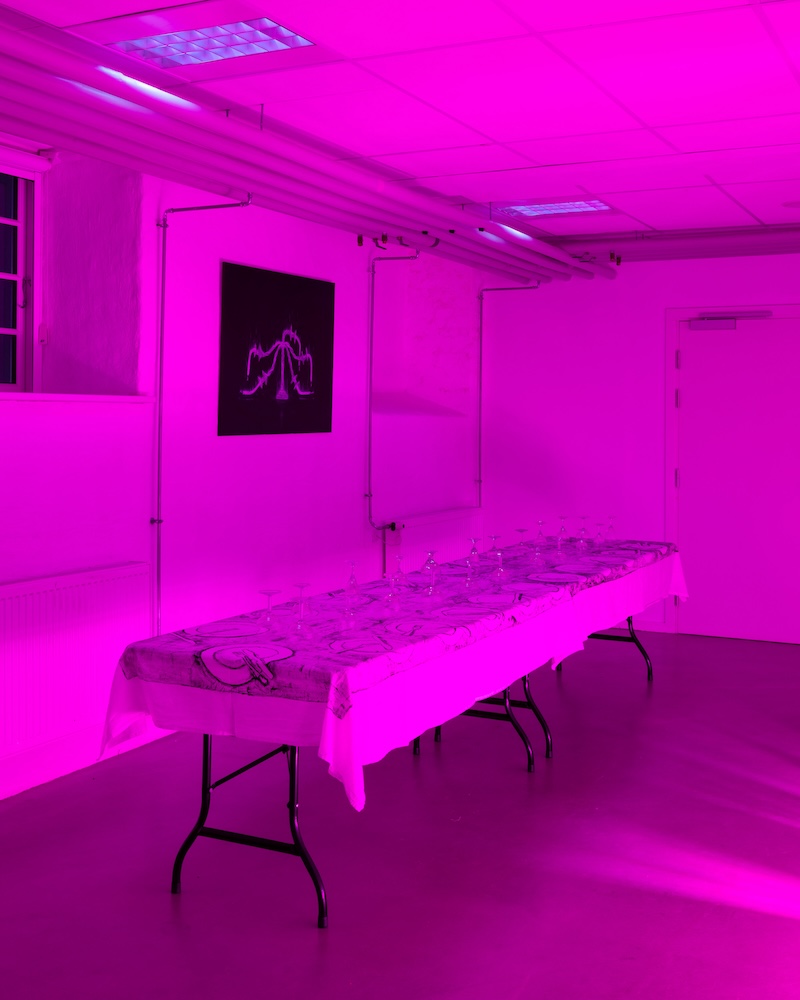
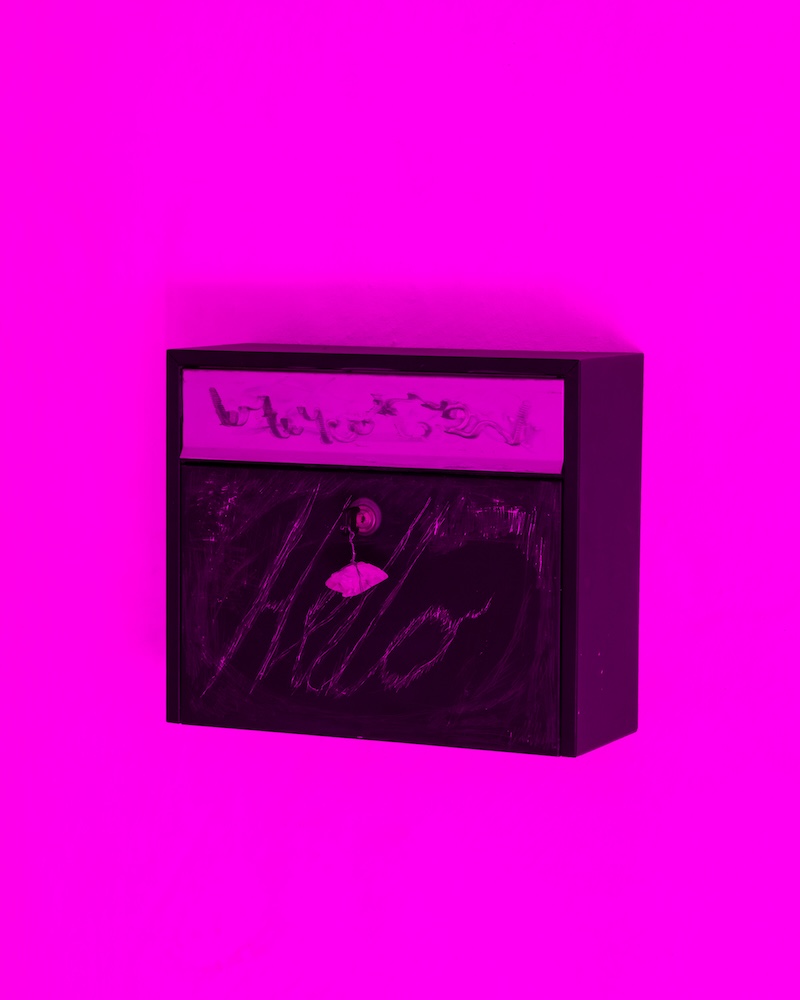
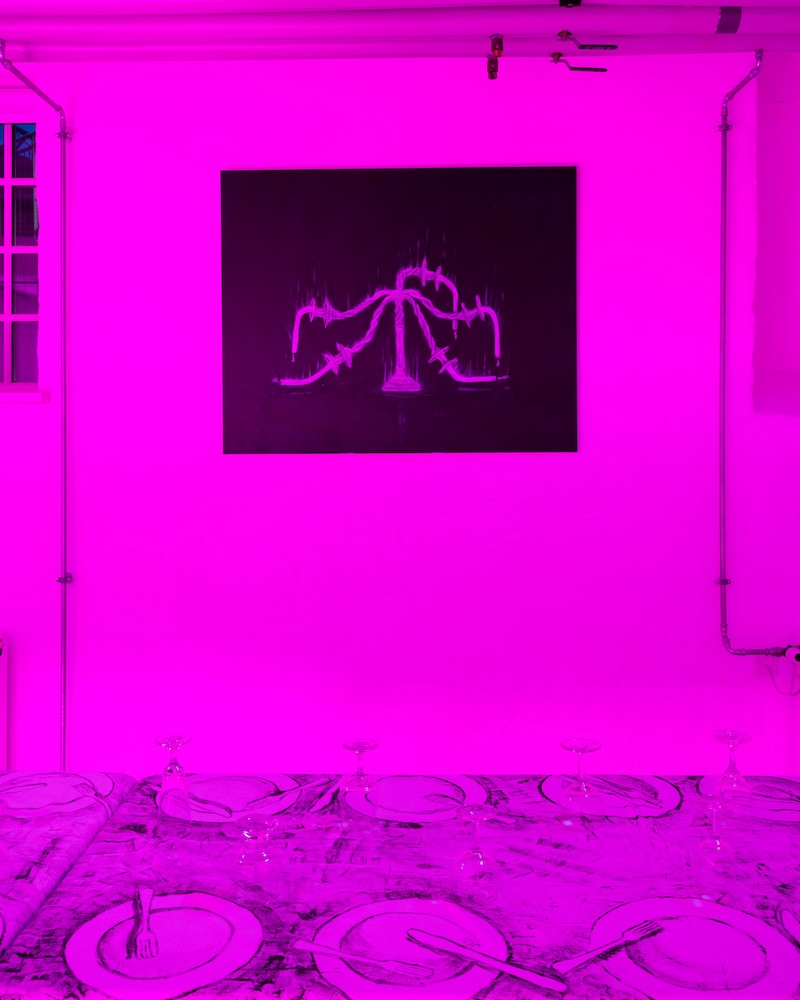
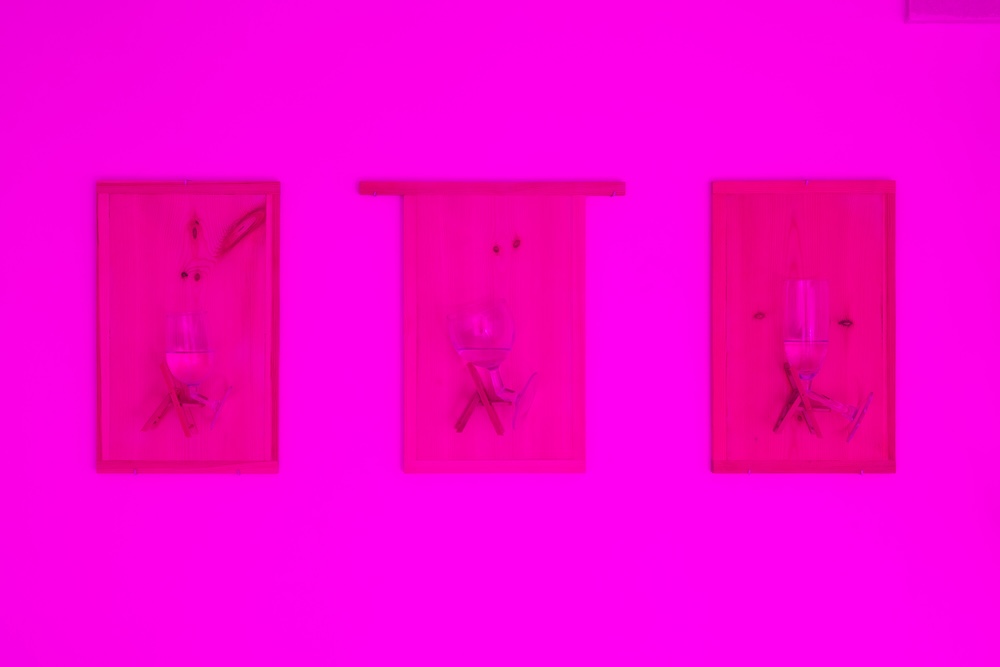
In A piece of land is a bar of gold, you step into an image of agriculture. You are not presented with a harmonious, coherent picture, but rather with fragmented elements. The field, the refrigerators, the images, and the long table appear as components within an increasingly invisible supply chain, experienced not from a single viewing position as in Golden Age painting, but from multiple perspectives obstructed by a heavy iron grid.
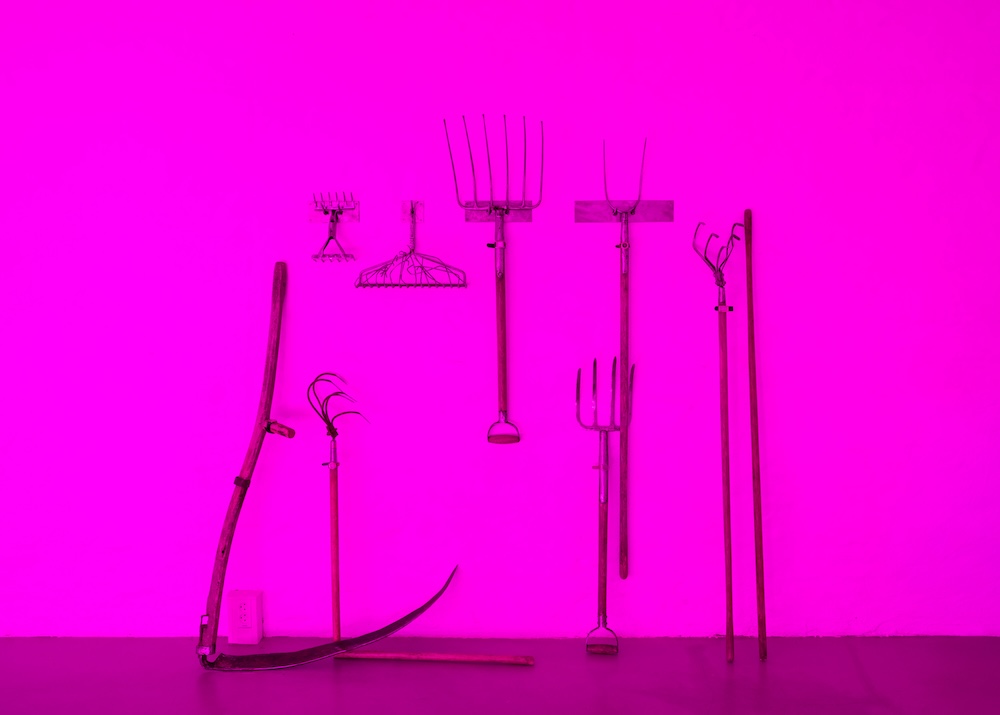
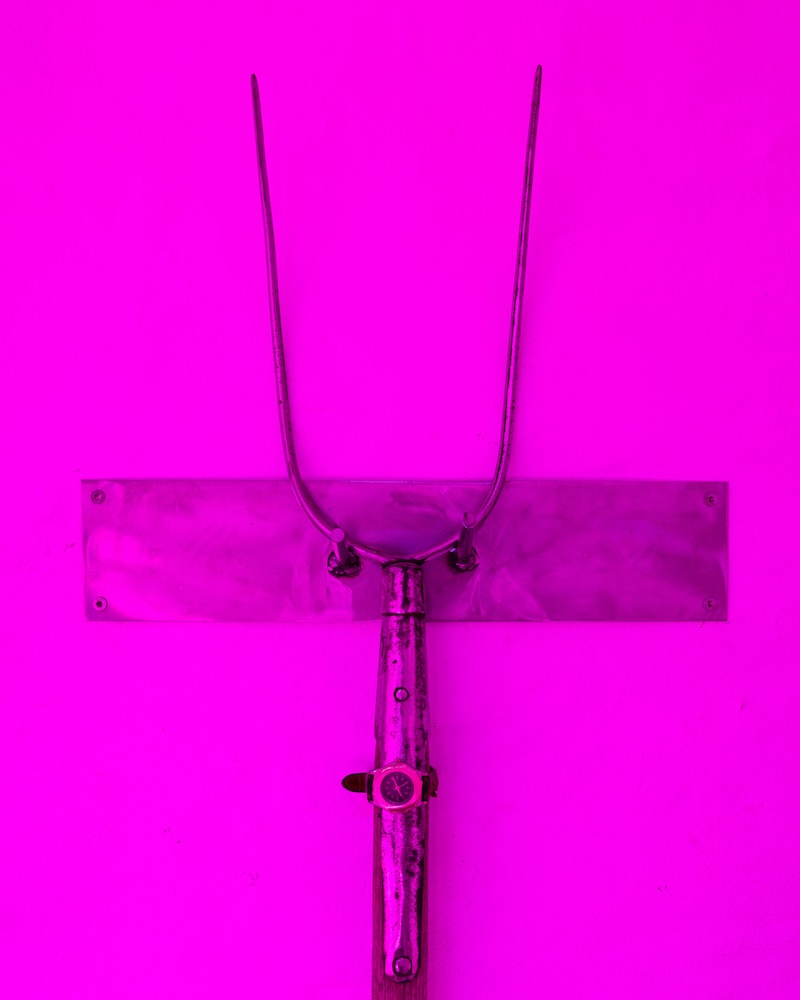
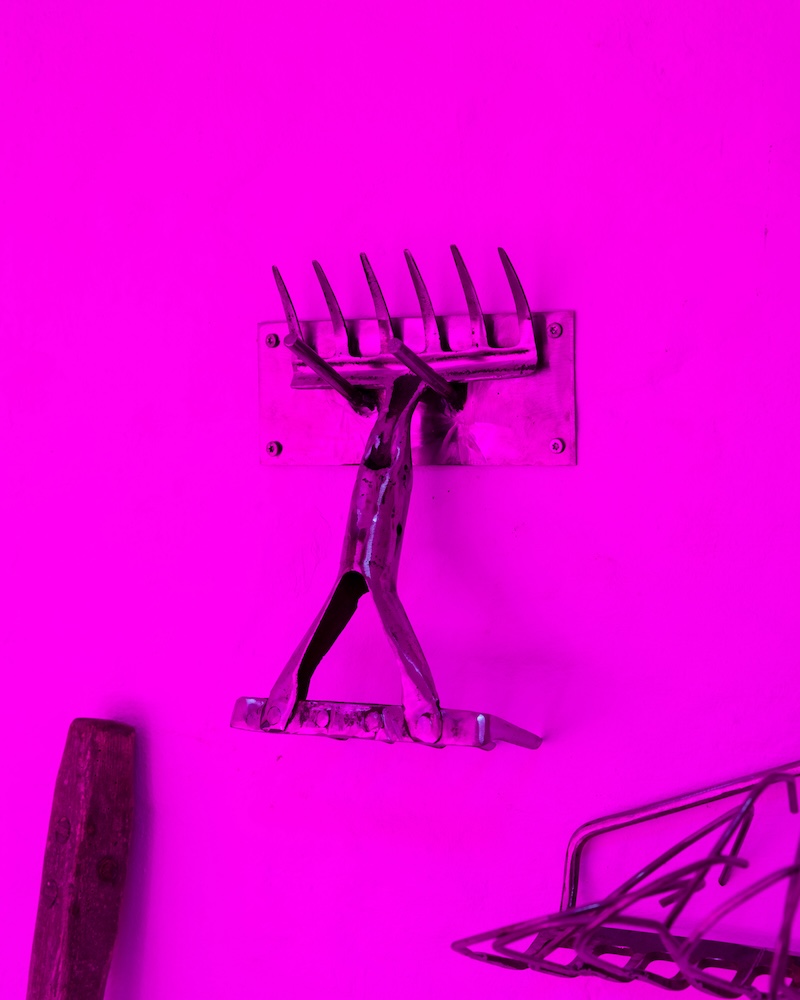
Although the exhibition does not present an idealized image of contemporary agricultural production, it is not purely documentary either. There is a sense of familiarity in the plastic-covered field, the intense growth-promoting light, and the gardening tools. These objects offer an immediate promise of productivity, yet through their artistic treatment they have been transformed into aesthetic objects, appearing as nostalgic ghosts.
The exhibition proposes a new aesthetic of production and agriculture, stripped of romanticism yet filled with fascination for surfaces and contradictions. It does not pass judgment on agriculture, but rather seeks to present Stæhr's own experiences as a student at the Organic Agricultural School, an operator at a vertical farm, and a visual artist. The works reveal both the potential to make something grow and the potential embedded in the cultivation of and understanding of existing agricultural practices, whether traditional or emerging.
The Expectation of Something That Can Grow
Amid the exhibition's cool aesthetic and technological surfaces lies a budding sense of life. An expectation that something can grow — perhaps not in a literal sense, but as an idea, a potential, a possibility for change. Within the plastic-covered surfaces one traces a promise of production and growth, but also a melancholy for what has been lost in the name of efficiency.
Where Golden Age painting fixed the landscape as a place of harmony and cultivated beauty, Stæhr instead portrays the landscape in a state of transition. Her works dissolve the stable perspective and depict a new, fragmented landscape in which aesthetics, nature, technology, and production merge into a new and unsettled terrain. It is something we can gather around at the covered tables, as a harvest of new insights, possibilities, and shared narratives.
Exhibition text — Marie Inge Malberg
The exhibition is kindly supported by Aarhus Municipality.
The exhibition A piece of land is a bar of gold is a solo exhibition by Maiken Stæhr.
The exhibition emerges from working in a vertical farm and explores how contemporary production reshapes understandings of nature, farming, and culture. The installation take shape as a fictional production unit within a synthetic, grow-light-coloured dreamscape, examining consumption, food practices, and farming nostalgia.
The opening will feature a concert by Lisen Larsen.
New Imagined Landscapes
A piece of land is never merely a piece of land. It is an image, a promise, an economic potential, and a cultural mirror. In the exhibition A piece of land is a bar of gold, Maiken Stæhr presents an image of a new form of agricultural production, a kind of contemporary technological proposal for a new production aesthetic and landscape painting.
The Landscape in Transition and Under Debate
We are facing the largest land-use transformation in several hundred years, involving 250,000 hectares of agricultural land that will be converted to increase the area devoted to nature, forest, and a healthier aquatic environment. The exhibition's title therefore resonates strongly at a time when land use is under debate and space is increasingly scarce. While the title contains an enormous sense of potential and promise, one also senses its irony, for not every piece of land and every type of soil holds the same value.
A piece of land can't be worth its weight in gold not only in a literal monetary sense, but also figuratively, since the way we utilize our landscape constitutes a cornerstone of our national identity. This became evident during Denmark's last major land-use transformation from the eighteenth to the nineteenth century, when the landscape was reshaped from wild nature into agricultural land and timber-producing forests. This development was beautifully documented by the painters of the Danish Golden Age, who depicted cultivated fields alongside untamed nature, images that continue to shape our understanding of what constitutes the ideal Danish landscape.
Step Into the New Landscape Image
In A piece of land is a bar of gold, you step into an image of agriculture. You are not presented with a harmonious, coherent picture, but rather with fragmented elements. The field, the refrigerators, the images, and the long table appear as components within an increasingly invisible supply chain, experienced not from a single viewing position as in Golden Age painting, but from multiple perspectives obstructed by a heavy iron grid.
Although the exhibition does not present an idealized image of contemporary agricultural production, it is not purely documentary either. There is a sense of familiarity in the plastic-covered field, the intense growth-promoting light, and the gardening tools. These objects offer an immediate promise of productivity, yet through their artistic treatment they have been transformed into aesthetic objects, appearing as nostalgic ghosts.
The exhibition proposes a new aesthetic of production and agriculture, stripped of romanticism yet filled with fascination for surfaces and contradictions. It does not pass judgment on agriculture, but rather seeks to present Stæhr's own experiences as a student at the Organic Agricultural School, an operator at a vertical farm, and a visual artist. The works reveal both the potential to make something grow and the potential embedded in the cultivation of and understanding of existing agricultural practices, whether traditional or emerging.
The Expectation of Something That Can Grow
Amid the exhibition's cool aesthetic and technological surfaces lies a budding sense of life. An expectation that something can grow — perhaps not in a literal sense, but as an idea, a potential, a possibility for change. Within the plastic-covered surfaces one traces a promise of production and growth, but also a melancholy for what has been lost in the name of efficiency.
Where Golden Age painting fixed the landscape as a place of harmony and cultivated beauty, Stæhr instead portrays the landscape in a state of transition. Her works dissolve the stable perspective and depict a new, fragmented landscape in which aesthetics, nature, technology, and production merge into a new and unsettled terrain. It is something we can gather around at the covered tables, as a harvest of new insights, possibilities, and shared narratives.
Exhibition text — Marie Inge Malberg
The exhibition is kindly supported by Aarhus Municipality.